Newborn Care
How Newborn Hearing Screening Works Before Discharge
Nearly every American baby has hearing screened before leaving the hospital, using tests that measure ear and nerve responses without requiring any cooperation.

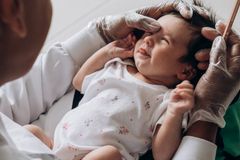
Hearing is screened in almost every American newborn before hospital discharge. The tests involved measure physical responses rather than behavior, which is what makes screening a sleeping baby possible.
Why screening happens so early
Language development depends on hearing during the first months and years, and delay in identifying hearing loss compresses the time available to respond.
Without screening, hearing loss was historically identified when a child failed to develop speech, often well into the second or third year.
Universal screening programs exist in every state, generally structured around identifying hearing loss, confirming it and beginning services within defined early timeframes.
The two tests used
One method plays sounds into the ear and records the faint echo produced by healthy structures in the inner ear, which indicates that part of the system is responding.
The other places electrodes on the head and records the nerve response to sound as it travels toward the brain, which tests further along the pathway.
Both are painless, take minutes, and work best on a sleeping newborn, which is why they are performed in the nursery rather than at a later appointment.
What a referral result means
A result outside the expected range is reported as a referral rather than a failure, because the screening is deliberately set to over-identify.
Fluid or debris in the ear canal after birth is a common cause, as is movement or background noise during the test, and rescreening often resolves the result.
A referral means a follow-up appointment is needed, not that hearing loss has been found. The follow-up is a full diagnostic evaluation with an audiologist.
Why follow-up is the weak link
Screening coverage is near universal, but a meaningful number of infants referred for follow-up do not complete it, which is the point at which programs lose children.
The reasons are practical: appointments scheduled weeks out, distance to a pediatric audiologist, insurance questions and the ordinary chaos of the newborn period.
State early hearing detection programs track these cases and follow up, which is why a family may receive contact from a public health office.
What screening cannot cover
Hearing loss can develop after birth from infection, genetic conditions with later onset or other causes, so a passed screen is not a permanent result.
Hearing questions therefore continue to appear at well-child visits, and parental concern is treated as a reason for evaluation regardless of the newborn result.
Any concern about how a baby responds to sound is raised with the pediatrician, who can refer for testing that does not depend on the child's cooperation.