Health & Safety
Hygiene, germs and how much to worry
Some hygiene practices matter substantially for infants and others are theatre, and the difference is well characterised.
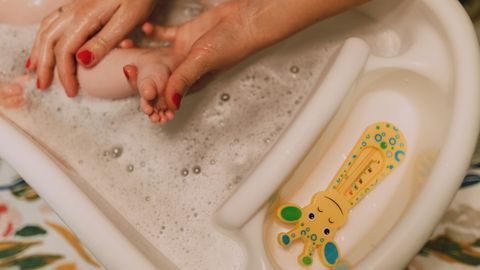
New parents receive a great deal of contradictory advice about germs, ranging from sterilising everything to deliberately exposing babies to dirt.
What genuinely matters
The practices with real evidence.
Handwashing, which is by a wide margin the most effective single measure — before handling the baby, before preparing feeds, after nappy changes, after using the toilet, and by anyone else who handles the baby.
Sterilising feeding equipment until around twelve months, since milk residue supports bacterial growth and infant immune systems are immature.
Safe formula preparation, using water at the correct temperature to kill organisms that can be present in powdered formula, as discussed elsewhere on this site.
Keeping newborns away from people who are unwell, particularly with respiratory infections, cold sores and gastroenteritis.
Vaccination, of the baby and of those around them — whooping cough vaccination in pregnancy and influenza vaccination for household members protect infants who are too young to be vaccinated themselves.
Food hygiene once eating solids: storage temperatures, thorough reheating, and avoiding high-risk foods.
The specific newborn concerns
Where caution is warranted for a limited period.
Cold sores: herpes simplex can cause serious neonatal infection, and nobody with an active cold sore should kiss a newborn.
This is one of the few situations where saying so directly to a relative is genuinely important.
Respiratory syncytial virus, which causes bronchiolitis and is dangerous in young infants — hand hygiene and avoiding unwell contacts matter, and immunisation is now available in several countries.
Whooping cough, which is severe in young infants and against which maternal vaccination protects.
And any febrile illness in a baby under three months, which requires urgent assessment regardless of how the baby looks.
What matters less than assumed
Where effort is frequently misdirected.
Sterilising dummies and toys beyond the early weeks, where washing is generally sufficient.
Antibacterial cleaning of every surface, where ordinary cleaning is adequate in most circumstances.
Preventing a baby from touching the floor, other people's hands, pets or the outdoors.
Antibacterial hand gels as a substitute for soap and water, which are less effective against some organisms including norovirus.
And sterilising bathwater or boiling everything, which is not necessary.
The hygiene hypothesis, correctly stated
Frequently invoked and frequently misapplied.
The observation is that reduced microbial exposure in early life is associated with higher rates of allergic and autoimmune conditions.
The evidence relates to the diversity of environmental microbial exposure — farms, animals, siblings, the outdoors — rather than to household cleanliness or to infections.
It is not an argument against handwashing, sterilising bottles or vaccination, all of which target specific pathogens rather than general microbial diversity.
The practical implication is that time outdoors, contact with animals and pets, and not sanitising every surface are reasonable, while targeted hygiene remains important.
Pets
Common questions.
Studies have generally found early pet exposure to be associated with reduced allergy rather than increased.
Practical measures: never leave a baby alone with any animal regardless of temperament, keep pets out of the sleep space, wash hands after handling animals and litter, keep pet food and litter trays out of reach, and maintain worming and flea treatment.
Toxoplasmosis from cat litter is primarily a pregnancy concern rather than an infant one.
Visitors
Where a family can set the terms.
Reasonable requests: wash hands, do not visit if unwell, do not kiss the baby's face, keep visits short in the early weeks.
These are not excessive and can be stated in advance in a message rather than negotiated at the door.
Nobody is entitled to hold a newborn.
And a parent enforcing these is not being difficult, which is worth remembering when the pressure comes from family.
Nursery and infections
What to expect.
Children in group care get more infections, particularly in the first year of attendance, which is well documented.
This is not evidence of a weak immune system.
Some evidence suggests a corresponding reduction in infections later, which is modest consolation at the time.
Exclusion periods for specific illnesses exist for good reason and are worth following even when inconvenient.
And handwashing at home after nursery reduces onward spread within the household.
General information only, not medical advice. Seek urgent assessment for any fever in a baby under three months, and keep anyone with a cold sore away from newborns.
Also by Dr Nina Castellanos
- Colds, coughs and what to giveHealth & Safety
- Rashes and what they meanHealth & Safety
- The six-to-eight week reviewNewborn Care
- Autism, ADHD and early signsDevelopment