Sleep
Safe sleep, and what the guidance actually says
The recommendations are specific, evidence-based, and frequently relayed in a vague form that helps nobody.

Safe sleep guidance is among the most successful public health interventions of recent decades, and it is also among the most often summarised so loosely that parents cannot apply it.
The core recommendations
Consistent across national guidance, with minor variations.
On the back for every sleep, day and night, until the baby can roll both ways independently.
Side sleeping is not safe.
Once a baby rolls onto their front by themselves, having been placed on their back, they do not need to be turned back.
In a clear, flat, firm sleep surface — a cot, crib or moses basket meeting current safety standards, with a firm flat mattress and a fitted sheet.
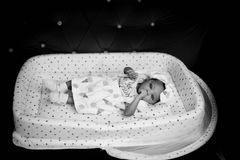
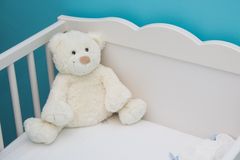
Nothing else in the sleep space: no pillows, duvets, bumpers, positioners, pods, nests, loose blankets or soft toys.
The sleep space should be empty apart from the baby.
In the same room as a caregiver for the first six months for both day and night sleeps, which is associated with reduced risk.
Feet to foot if using a blanket, tucked in firmly and no higher than the shoulders, or better, a correctly sized sleeping bag.
Not too hot: a room temperature around sixteen to twenty degrees, and checking the baby's chest or back of the neck rather than hands and feet, which are normally cooler.
Smoke-free in pregnancy and after birth, which is one of the strongest modifiable risk factors.
Breastfeeding is associated with reduced risk.
Immunisation is associated with reduced risk.
Bedsharing
Where guidance differs between countries and where honesty matters more than a slogan.
Some authorities advise against bedsharing entirely; others recognise that a large proportion of parents do it, sometimes unintentionally, and provide risk-reduction advice on that basis.
What is consistent is that certain circumstances make bedsharing considerably more dangerous, and these are never acceptable.
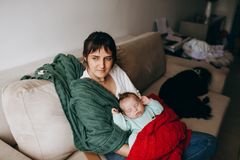
Never sleep with a baby on a sofa or armchair, which carries a very high risk and is one of the clearest findings in the evidence.
Never bedshare if anyone in the bed has drunk alcohol, taken drugs or medication causing drowsiness, or smokes.
Additional caution applies with premature or low birth weight babies.
Where a parent chooses to bedshare in the absence of those factors, risk reduction means a firm flat surface, no pillows or duvet near the baby, no other children or pets in the bed, no gap where the baby could become trapped, and the baby placed on their back.
The practical reason for giving this information rather than withholding it is that exhausted parents fall asleep feeding — and it is safer for that to happen in a prepared bed than on a sofa.
What is not recommended
Products marketed for infant sleep frequently fall outside guidance.
Cot bumpers, sleep positioners and pods, which are associated with risk and provide no benefit.
Inclined sleepers, which have been recalled in several countries after deaths.
Sleeping in car seats, bouncers and swings for extended periods or unsupervised, since the position can compromise breathing — a car seat is for travel, and a sleeping baby should be moved to a flat surface on arrival.
Weighted sleeping bags and blankets, which several safety bodies advise against for infants.
And home monitoring devices marketed as preventing sudden infant death, which have no evidence of doing so and which generate false alarms.
Dummies
An area of nuance.
Dummy use at sleep is associated with reduced risk in the evidence, and guidance in several countries mentions it as an option once breastfeeding is established.
If it falls out during sleep it does not need replacing.
It should not be forced on a baby who does not want it, and it is generally advised to stop by around a year for dental and speech reasons.
Naps
The same rules apply, and they are frequently relaxed for daytime sleep.
A baby napping on a parent's chest while the parent is awake is a different situation from a baby left to nap unsupervised on a sofa, and the distinction is being awake.
Anyone else caring for the baby — grandparents, childcare, friends — needs the same information, since a substantial proportion of incidents occur when a baby is sleeping somewhere unfamiliar or with someone unaware of current guidance.
General information only, not medical advice. Guidance varies by country — follow your national safe sleep recommendations and consult your health visitor or midwife.