Newborn Care
Skin To Skin Contact And What It Does
Holding a naked newborn against bare skin has measurable effects on temperature, breathing and feeding behaviour, which is why it is built into routine practice after birth.
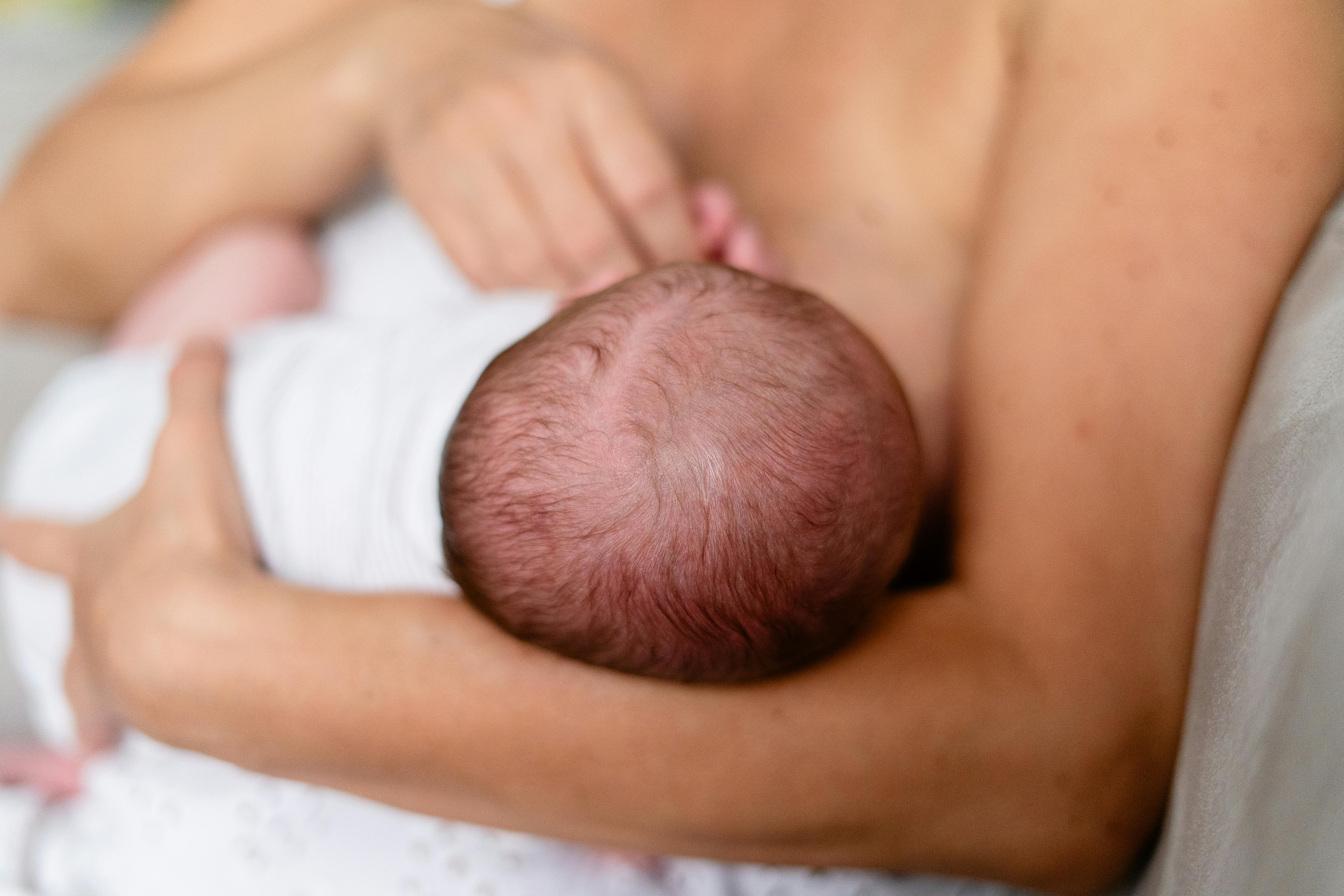
Placing a newborn directly against a parent's chest is now standard practice after birth in most settings. It is not a sentimental gesture; the effects are physiological and measurable.
Temperature control is the first job
Newborns lose heat quickly. They have a large surface area relative to their mass, thin skin and little insulating fat, and they cannot shiver effectively.
A parent's chest responds to a cold baby by warming, and to a warm baby by cooling slightly. This adjustment makes the chest a more responsive heat source than a cot or a blanket.
Stable temperature matters because a cold baby burns energy fast, uses up glucose, and becomes too tired to feed. Warmth and feeding are linked from the start.
Breathing and heart rate settle
Babies held skin to skin tend to show steadier breathing and heart rates than those separated, and stress hormone levels are lower. The effect is consistent enough to be used in neonatal care.
Extended skin to skin care for premature and low birth weight babies is a recognised clinical practice with its own protocols. It is used alongside monitoring, not instead of it.
The mechanism appears to involve the sheer volume of touch, pressure and smell input, which reduces the arousal response that separation produces.
Why it changes feeding behaviour
A newborn placed on the chest will, given time, move toward the breast, locate it by smell and touch, and attach with little assistance. This sequence is reliable enough to be documented as a set of stages.
Interrupting it with weighing, dressing or handling tends to break the sequence and make the first feed harder. Routine tasks are therefore usually delayed where the baby is well.
Skin contact later on still helps with reluctant feeders. Stripping a baby to the nappy and holding them upright against the chest often restores feeding behaviour that has stalled.
Bacteria and the first colonisation
A newborn's skin and gut are colonised in the first hours by whatever they meet. Contact with a parent supplies familiar organisms alongside antibodies already present in the parent's milk.
This pairing of exposure and matched antibodies is one reason early contact and early feeding are treated as connected rather than separate events.
The effect is about which organisms arrive first rather than about sterility. Cleanliness has value, but so does exposure to a parent's own flora.
Doing it safely
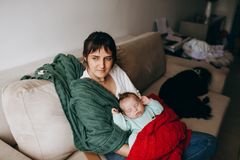
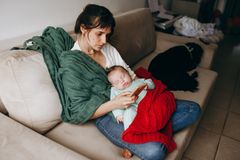
The baby should be positioned with the face visible, head turned to one side, neck straight and nose and mouth clear. A parent who may fall asleep should hand the baby to someone else.
Sedated or exhausted parents, sofas and armchairs are where the recognised risks lie. The practice is safe when the adult is awake and upright, and it is not safe on a sofa.
Any partner can do it, and it works after caesarean births with adjusted positioning. Staff will support it unless the baby needs immediate medical attention.