Feeding
Starting solid food
The timing guidance has a reason, the allergy advice has reversed, and the method matters less than people argue.
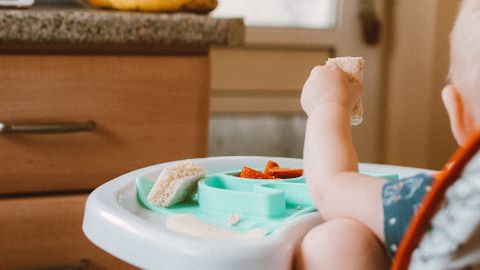
Introducing solid food generates more disagreement between generations than almost any other aspect of infant care, and several key recommendations have genuinely changed.
When
Guidance in most countries recommends around six months, with the World Health Organization recommending exclusive breastfeeding to six months.
Some national bodies and paediatric societies indicate a window from around four to six months, and the practical position is that solids should not begin before seventeen weeks under any guidance.
The reasons for waiting: gut and kidney maturity, reduced choking risk, and the developmental readiness needed to manage food.
The readiness signs matter more than the date: being able to sit with support and hold the head steady, coordinating eyes, hands and mouth to look at food and take it, and being able to swallow food rather than pushing it out with the tongue.
What are not readiness signs: chewing fists, waking more at night, and wanting more milk — all of which are commonly cited and are normal at this age anyway.
Preterm babies are assessed individually rather than by corrected age alone.
Allergens: the reversal
The most important change in this area.
Advice for years was to delay allergenic foods.
Trial evidence, particularly on early peanut introduction in high-risk infants, showed that early introduction substantially reduced allergy development, and guidance reversed accordingly.
Current advice in most countries is to introduce the common allergens from around six months, alongside other foods, and not to delay them.
The main allergens: peanut, tree nuts, egg, cow's milk, wheat, soya, fish, shellfish, sesame.
Practical points: introduce one new allergen at a time, earlier in the day rather than at bedtime, in a small amount initially, when the baby is well.
Once introduced and tolerated, keep them in the diet regularly, since tolerance requires ongoing exposure.
Whole nuts are a choking hazard and must not be given — use smooth nut butter thinned, or ground.
Infants with severe eczema or existing food allergy should discuss introduction with a clinician first, since these are the highest-risk group and specialist advice may apply.
What to start with
Iron is the nutritional priority.
Stores from birth deplete by around six months, and breast milk is low in iron, which makes iron-rich foods important from the start: meat, fish, eggs, pulses, and iron-fortified cereals, with vitamin C-containing foods alongside to improve absorption.
Beyond iron, offer a wide variety of flavours and textures, including bitter vegetables early, since repeated exposure builds acceptance and it may take many exposures before a food is accepted.
Move on from purées reasonably promptly to lumpier textures and finger foods, since there is evidence that delayed introduction of lumps is associated with later feeding difficulties.
Purée or baby-led
Where the argument exceeds the evidence.
Baby-led weaning involves offering appropriately sized soft finger foods from the start and letting the baby self-feed.
Trials comparing approaches have generally found no significant difference in growth or, when safe food shapes are used, in choking risk.
Concerns about iron intake in baby-led approaches are addressed by offering iron-rich foods deliberately.
Most families do a mixture, which is entirely sensible.
Choking
The practical safety section.
Gagging is common, noisy, and is a protective reflex — the baby is managing.
Choking is silent or produces a weak ineffective cough, with distress and difficulty breathing, and requires immediate action.
Every parent should learn infant choking first aid, which is a short course and is genuinely useful.
Foods to avoid or modify: whole nuts, whole grapes and cherry tomatoes — quarter them lengthways — popcorn, raw hard vegetable and apple chunks, sausages in rounds, marshmallows, and anything hard and round.
Always supervise eating, sit the baby upright, and never let a child eat while walking, in a car seat or lying down.
What to avoid in the first year
Specific and worth knowing.
Honey, because of the risk of infant botulism.
Cow's milk as a main drink before twelve months, though it can be used in cooking from six months.
Added salt, since infant kidneys cannot handle it — no salt in cooking, and caution with stock cubes, processed meat and bread quantities.
Added sugar and sugary drinks.
Whole nuts.
Raw or lightly cooked eggs unless they carry an appropriate safety mark.
Shark, swordfish and marlin, and limited amounts of oily fish.
Rice drinks, because of arsenic content.
And unpasteurised dairy.
Milk alongside
Breast milk or formula remains the main source of nutrition until around a year, with solids gradually increasing.
Offer water in an open or free-flow cup with meals from six months.
Vitamin supplementation is recommended in many countries — commonly vitamin D for all babies, with combined supplements for breastfed infants — and the specifics vary, so it is worth checking local guidance.
General information only, not medical advice. Guidance varies by country. Consult a health visitor or clinician, particularly if your baby has severe eczema or an existing allergy, and learn infant choking first aid.