Newborn Care
Swaddling And Why The Advice Changed
Wrapping a baby firmly damps the startle reflex, but guidance has narrowed because of documented risks to hips and to safe sleep once a baby can roll.
Swaddling has been used across most cultures for a very long time, and formal advice about it has become noticeably more cautious. The reasons are specific rather than general nervousness.
What the wrap is doing
Newborns have a startle reflex that throws the arms outward in response to noise, movement or the sensation of falling. It can wake a baby who was settling.
A firm wrap around the arms damps that movement so the reflex does not complete. The limb never travels far enough to rouse the baby fully.
The pressure and containment also resemble conditions before birth, which is the usual explanation for why some babies settle noticeably faster when wrapped.
Hips need room the arms do not
A newborn's hip sockets are shallow and still forming. Holding the legs straight and pressed together puts the joint in a position that can interfere with that development.
This is why current guidance describes hip-healthy swaddling, where the wrap is firm across the chest but loose below the waist so the legs can bend up and out.
Traditional tight leg wrapping is the practice associated with higher rates of hip dysplasia in some populations. The concern is about the legs specifically, not about wrapping as such.
Rolling is the hard stop
A swaddled baby who rolls onto their front cannot push up or turn their head freely, because the arms that would do that work are restrained. This is the central safe sleep concern.
Guidance therefore says swaddling stops at the first signs of rolling, which for many babies is somewhere in the middle of the first half of the first year. It is stopped before the roll is reliable, not after.
Transitional garments that free one or both arms exist for this reason. The step being taken is the removal of arm restraint, however it is achieved.
Overheating and how it happens
A wrap adds a layer, and layers are cumulative. A swaddle over a sleepsuit inside a warm room can push a baby above a comfortable temperature.
Overheating is a recognised risk factor in safe sleep guidance, which is why room temperature, fabric weight and total layers are considered together rather than separately.
Signs are checked at the chest or back of the neck rather than at hands and feet, which normally feel cool in babies regardless.
Where swaddling interacts with feeding
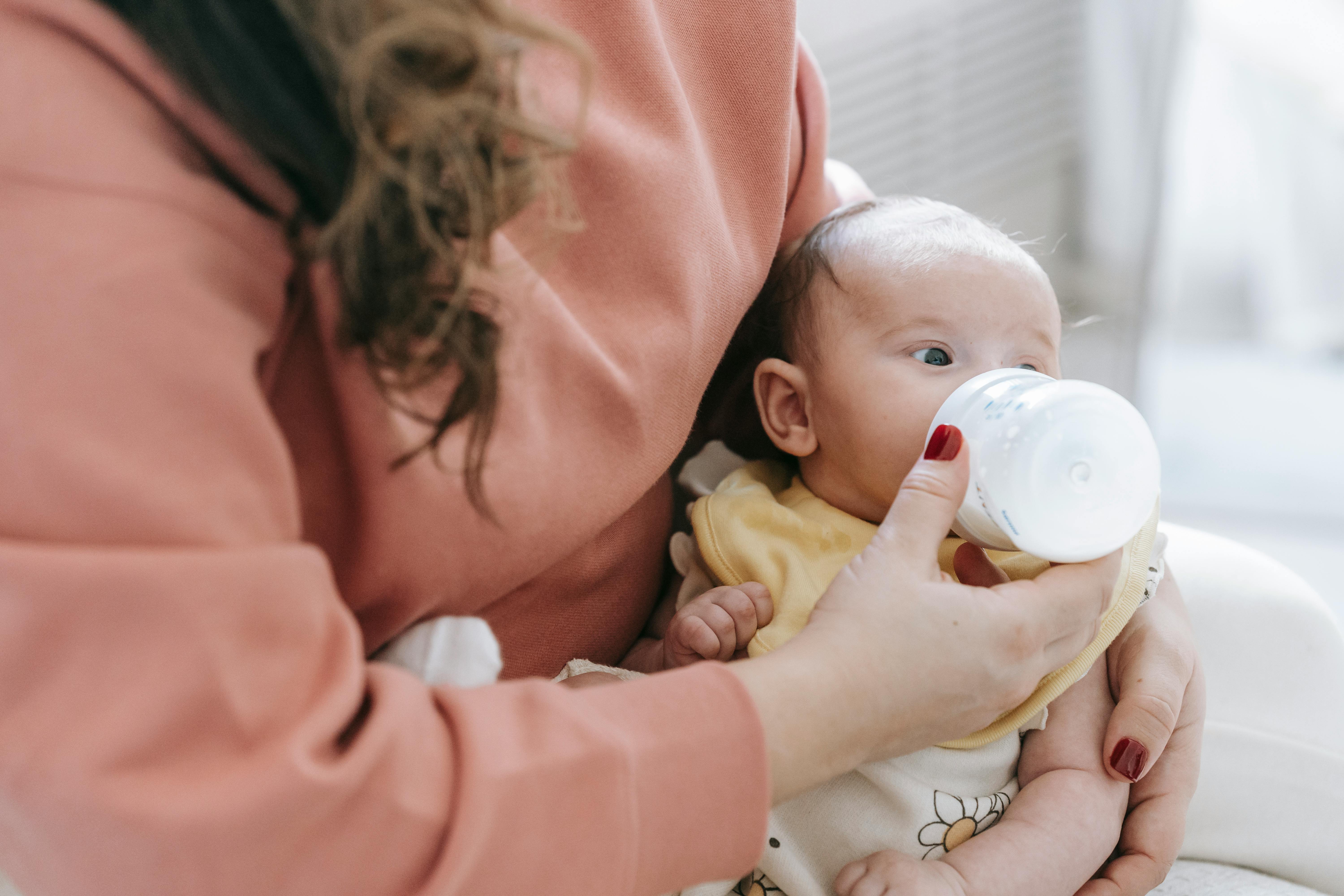
Wrapped arms cannot move toward the mouth, which removes some of the early hunger cues a parent would otherwise see. A swaddled baby may signal later and less clearly.
In the first days, when frequent feeding is establishing supply and weight is being watched, that matters. Unwrapping for feeds and for skin contact is generally advised.
Babies with feeding difficulties, low birth weight or hip concerns should have swaddling discussed with a midwife or health visitor rather than adopted by default.