Newborn Care
Twins and multiples in the first year
The practical arithmetic is different in ways that generic baby advice does not address at all.
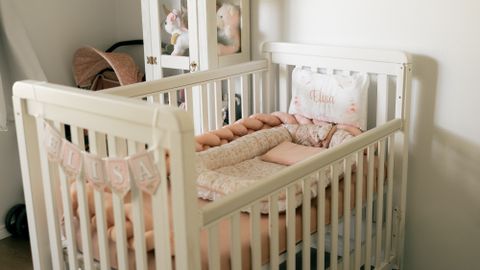
Most baby advice assumes one baby, which makes a substantial part of it either unusable or actively unhelpful for families with two or more.
What is different medically
Multiple pregnancies have higher rates of preterm birth, low birth weight and neonatal unit admission, which means many twin parents start in a unit rather than at home.
Twins are commonly born earlier than singletons even without complications, and corrected age applies as it does for any preterm baby.
Identical twins sharing a placenta have specific risks monitored during pregnancy.
And postnatal recovery is frequently more demanding, with higher rates of caesarean birth and greater physical strain.
Feeding
The largest practical challenge.
Breastfeeding twins is possible, and supply responds to demand — two babies feeding produces supply for two.
Tandem feeding, with both at once, saves considerable time and takes practice; a twin feeding pillow makes a substantial difference.
Positions used include double rugby hold, double cradle and combinations.
Feeding separately in the early days while establishing latch, then moving to tandem, is a common route.
Many families combination feed, and many formula feed, and the practical arithmetic of eight to twelve feeds each in twenty-four hours makes this a decision about survival as much as preference.
Specialist twin feeding support exists in many places and is worth seeking specifically, since generic support frequently does not address the logistics.
Sleep
Where the arrangements differ.
Twins may share a room and, in the early weeks, some guidance permits sharing a cot placed side by side or head to head, with each baby having their own clear safe sleep space.
Practice varies by country and they should be separated once they can roll into each other.
All standard safe sleep guidance applies to each baby individually.
Synchronising is the practical goal: waking the second baby when the first wakes to feed, rather than running two separate schedules, which is the difference between broken sleep and no sleep.
Most twin parents find that babies do not wake each other as much as expected, and that they habituate to each other's noise.
The logistics
What actually helps.
Accept every offer of help, and be specific about what would be useful.
A double pram that fits through your front door and into your car, tested before buying.
Two of the essentials and one of everything else.
Slings, which allow one baby to be carried while the other is in a pram or cot.
Batch preparation of everything.
A changing station on each floor.
Online shopping.
And a record of who fed when and how much, since it is genuinely impossible to remember with two.
Treating them as individuals
Which becomes more important over the first year.
Twins are frequently addressed as a unit, dressed identically and compared constantly, and researchers and twin organisations consistently recommend supporting individual identity.
Practical steps: using their names rather than "the twins", one-to-one time with each where possible, allowing different preferences and interests, and resisting comparison of milestones, which they will reach at different times.
Developmental differences between twins are normal and are not a competition.
Development
Points specific to multiples.
Language development in twins is on average slightly later than in singletons, attributed largely to reduced individual adult interaction, which is a reason to prioritise one-to-one talking rather than a cause for alarm.
Any child with language concerns should have hearing checked and be referred, and being a twin is not a reason to wait.
Preterm birth is a more significant factor than twinship for most developmental outcomes.
The parents
Where the load is genuinely different.
Rates of postnatal depression and anxiety are higher in parents of multiples, which is unsurprising given sleep deprivation, feeding demands and isolation.
Getting out of the house is physically harder, which increases isolation at exactly the point when contact matters most.
Twin and multiple birth organisations exist in most countries, run peer groups, and are the single most useful resource for practical advice, because generic parenting advice does not model two.
Financial strain is real, with nursery costs and equipment doubling.
And asking for help repeatedly is necessary rather than indulgent, since the demand genuinely exceeds what two adults can cover, and frequently there is only one adult.
What to say to twin parents
Since everyone asks the same three questions.
Offer something specific: bringing food, holding a baby, taking a load of washing, watching them for an hour.
Do not ask whether they are natural or which is the good one.
Do not tell them how they must have their hands full, which they know.
And accept that visiting is help only if you do something while you are there.
General information only, not medical advice. Consult your midwife, health visitor or clinician about feeding and sleep arrangements for multiples, and seek specialist twin feeding support.