Sleep
How Overheating Shapes Nursery Temperature Guidance
Infants shed heat poorly and cannot remove layers, which is why safe sleep advice addresses room temperature and clothing together rather than either alone.
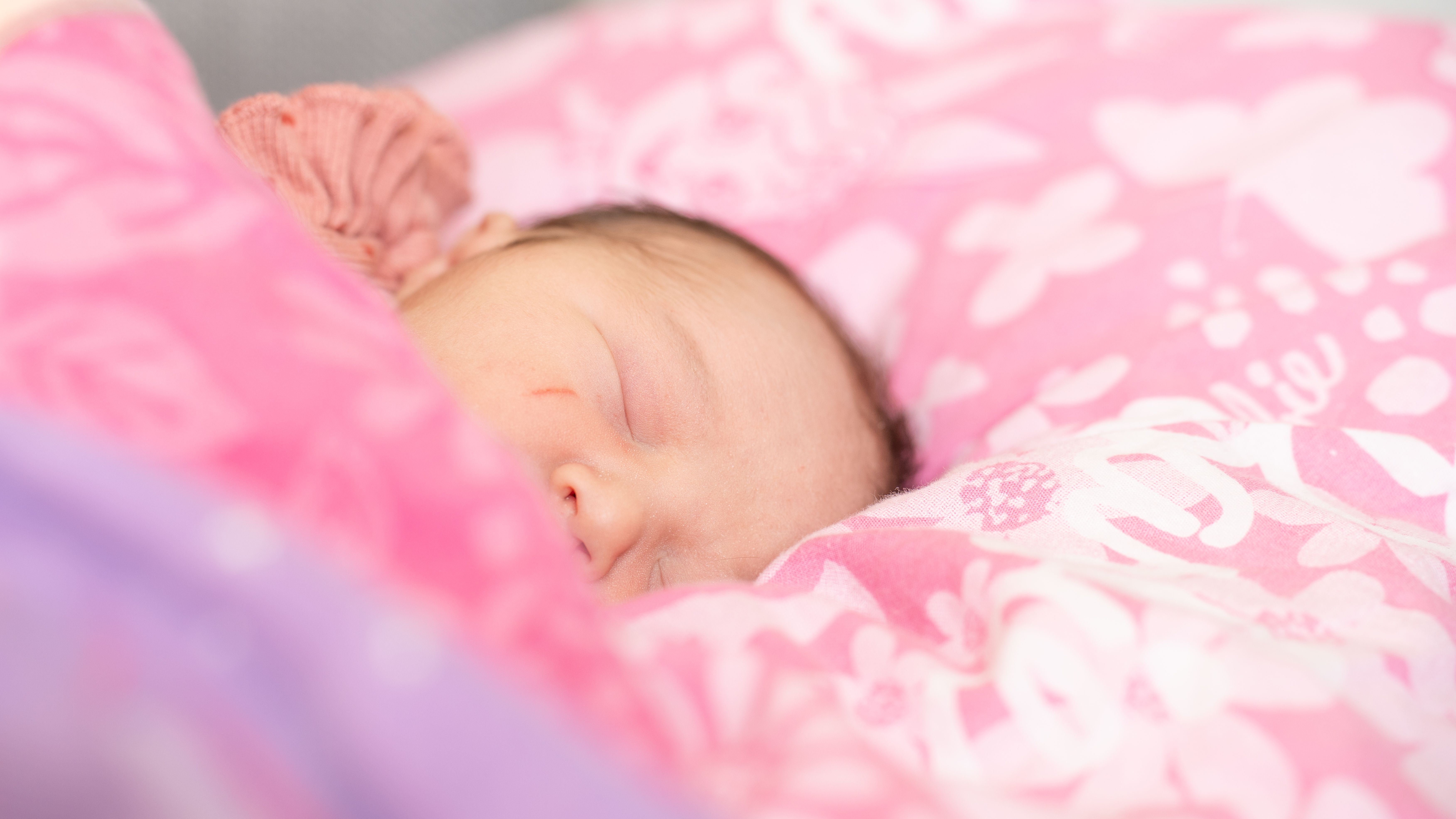
Room temperature appears in infant sleep guidance alongside surfaces and bedding. The reason is that thermal regulation in the first months works differently from an adult's in several specific ways.
Why infants heat and cool faster
A small body has a large surface area relative to its mass, so it exchanges heat with the surroundings more rapidly in both directions than a larger body does.
Sweating, the main mechanism adults use to shed heat, is limited in early infancy, with sweat glands not yet functioning at adult capacity.
The head accounts for a large proportion of an infant's surface area and is an important route for heat loss, which is why covering it changes the balance substantially.
What an infant cannot do about it
An older child who is too warm pushes off a cover, moves to a cooler spot or removes a layer. None of these are available to a young infant.
Signaling is also limited. Distress from being too warm looks much like distress from anything else, so the cause is not obvious to a caregiver.
Every warmth decision therefore holds for the whole sleep period, made in advance by an adult who cannot check it easily without waking the baby.
Why the guidance covers the whole combination
Room temperature alone determines little, since the same room produces very different conditions depending on what an infant is wearing.
Guidance therefore describes dressing an infant in roughly what a lightly dressed adult would find comfortable in the same room, with layers rather than a single heavy item.
Hats indoors receive specific mention, because a covered head removes a major heat loss route, and headwear used at birth is not intended for routine indoor sleep.
How overheating enters the risk discussion
Overheating appears in sleep-related death investigations as a recurring circumstance, which is how it entered prevention guidance in the first place.
The proposed mechanisms involve effects of thermal stress on arousal, meaning an overheated infant may be less able to rouse in response to a problem.
The evidence comes from patterns in case data rather than experiments, which is true of most safe sleep guidance and is why it addresses circumstances.
What to do with a specific number
Published ranges circulate widely, but a thermostat reading measures one spot, and nurseries vary with sun exposure, vents, floor level and season.
Checking the chest or the back of the neck rather than hands or feet reflects that extremities run cooler in infants as a matter of circulation.
A baby who feels unusually hot or cold, or who has a fever, is a call to the pediatrician rather than a thermostat adjustment.